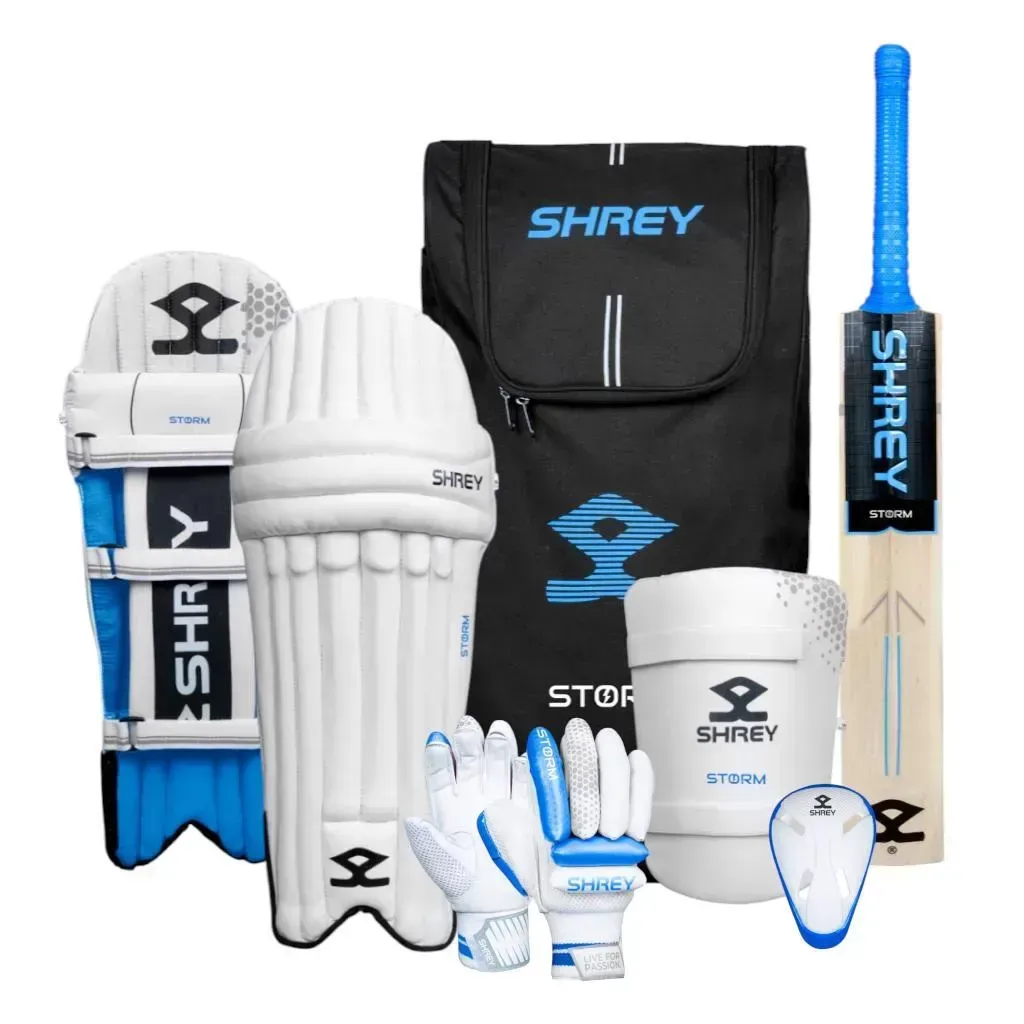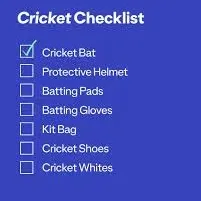
A complete cricket kit has roughly 14 items, but you do not need all of them on day one. The essentials are a bat, pads, gloves, helmet, abdominal guard, and shoes. Everything else is either optional or only needed at certain levels. This checklist covers exactly what you need, what is nice to have, and what most beginners waste money on. Once you have your kit, our guide on how to pack a cricket bag shows you how to organise it properly.
Essential Cricket Kit (Day One)
These six items are non-negotiable for anyone facing a leather ball:
Item | Why It Is Essential | Typical Cost |
|---|---|---|
Cricket bat | Cannot bat without it. Match to your height and weight | $50 - $300 |
Batting pads | Protects shins from leather ball impact | $40 - $200 |
Batting gloves | Protects fingers and gives bat grip | $30 - $150 |
Helmet | Mandatory against pace bowling. Must meet BS 7928 standard | $50 - $200 |
Abdominal guard (box) | Mandatory for all players, especially juniors | $10 - $30 |
Cricket shoes | Spikes or rubber soles depending on surface | $60 - $200 |
Total essential kit: $240 to $1,080 depending on quality level. A solid beginner kit can be assembled for under $300.
Strongly Recommended (Within First Season)
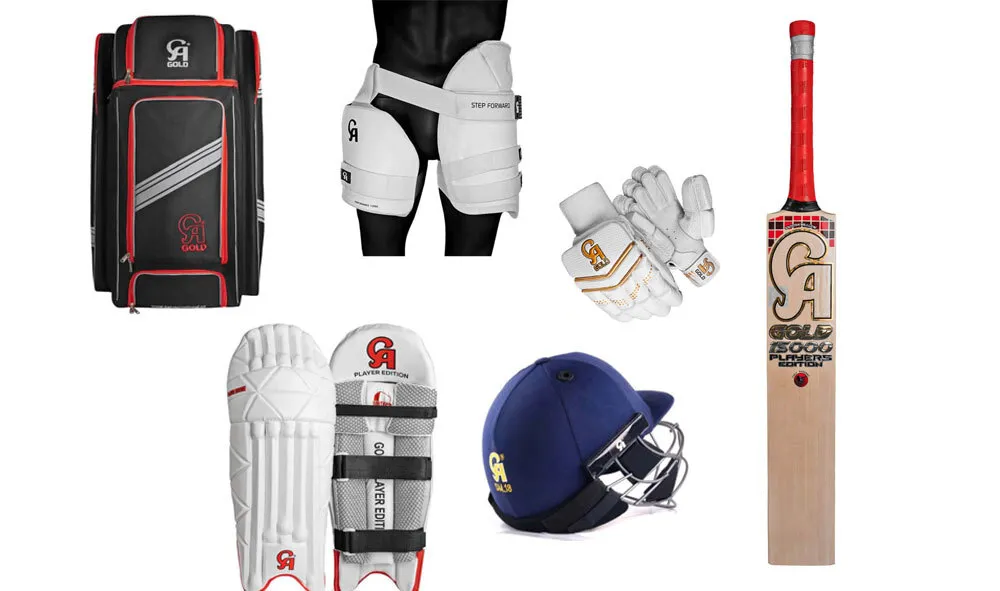
Add these as soon as you can afford to:
Cricket bag: Wheeled, duffle, or backpack. Cheap kit bags work but a proper cricket bag protects gear
Thigh pad: Inner thigh protection. Essential against fast pace
Inner gloves: Sweat absorption and blister prevention
Cricket whites or coloured kit: Most clubs require uniform or white clothing
Neck guard / stem guard: Mandatory at international level and increasingly required at domestic and club level
Optional / Nice-to-Have
Arm guard: Useful against high pace, optional otherwise
Chest guard: Mainly for facing very fast bowling on bouncy pitches
Sunglasses: For fielding in bright conditions
Cricket cap or wide-brim hat: Sun protection during long days in the field
Sweater or jumper: For cold-weather cricket, especially in England and New Zealand
Spike key and spare spikes: For maintaining spike shoes
Wicket Keepers: Different Kit Needed
If you are a wicket keeper, your kit is different:
Wicket keeping gloves: Larger, padded mitts (not batting gloves)
Wicket keeping pads: Lighter and more flexible than batting pads
Inner gloves: Essential for keepers due to long catching sessions
Helmet: Required when keeping up to the stumps
You still need a bat, batting pads, and batting gloves for when you bat in the team's order.
From experience: When I joined club cricket, I made the classic mistake of buying everything at once and overspending on each item. Half my kit was either too premium for my level or unnecessary. The smart approach is to start with the six essentials in mid-range quality, then add specialty items only when you actually need them. A first-season player does not need a $500 bat. Spend that money over 3 seasons of upgrades instead.
Cricket Kit Budget Breakdown
Budget Tier | Total Cost | What You Get |
|---|---|---|
Beginner | $250 - $400 | Kashmir willow bat, entry-level pads/gloves/helmet, rubber shoes, basic bag |
Club Cricket | $500 - $900 | Grade 3 English willow bat, mid-range pads/gloves, BS 7928 helmet, half spikes |
Serious Club / Rep | $900 - $1,500 | Grade 2 English willow, premium pads/gloves, top helmet, full spikes, wheelie bag |
Pro Level | $1,500+ | Grade 1 bats, custom pads/gloves, multiple helmets, elite shoes, full kit duplicates |
Common Beginner Kit Mistakes
Buying a Grade 1 English willow bat first: Wasted money. A Grade 3 or Kashmir willow is enough for your first 1-2 seasons
Skipping the helmet: Some leagues will not let you bat without one, and your insurance may be void
Buying pads for show, not fit: Get the right size first, brand second
Cheap helmet that does not meet BS 7928: Illegal in most leagues and unsafe
Wrong shoes for the surface: Spikes on concrete or rubber on wet turf both fail. Match to playing conditions
Buying a coffin bag (huge wheelie) when you only have basic kit. Start with a duffle
Junior Cricket Kit Differences
Kids need:
Junior cricket bat sized to height (Size 0 to Harrow)
Junior pads and gloves matched to age
Mandatory helmet with neck guard at all junior levels
Mandatory abdominal guard for all junior players
Cricket shoes with rubber soles or half spikes
Junior kits cost roughly 50-70% of adult equivalents but kids outgrow them every 1-2 seasons. Do not overspend on junior premium gear.
Conclusion
The cricket kit checklist is simple: get the six essentials in proper sizes, add the strongly recommended items within your first season, and skip the optional gear until you actually need it. Match each item to your level, your playing conditions, and your budget. Once your kit is built, organising it properly matters as much as buying it. Read our guide on how to pack a cricket bag for the right way to lay everything out, and check our batting pads guide and glove sizing guide for the most important fit decisions.
FAQs
What is the minimum cricket kit a beginner needs?
Bat, pads, gloves, helmet, abdominal guard, and shoes. Six items. Total cost from $250 if buying entry-level.
How much does a full cricket kit cost?
$250 - $400 for beginner level, $500 - $900 for club cricket, $900+ for serious competitive play.
Do I need a thigh pad and arm guard as a beginner?
Not on day one. Add a thigh pad within your first season. Arm guard is optional unless you face high pace regularly.
Can I share cricket kit with teammates?
Helmets, pads, and gloves can be shared if sized similarly. Never share an abdominal guard for hygiene reasons. Most clubs encourage personal kit.